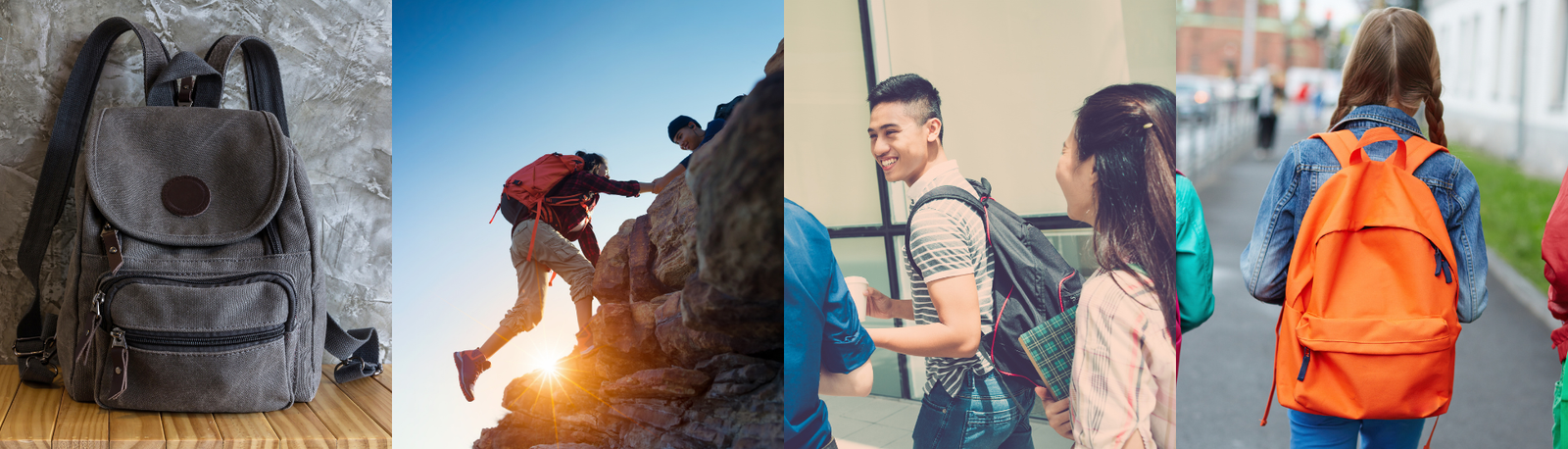
Dear procurement decision-makers, hello! I’m SENHAN, specializing in supply chain and innovative material strategy analysis. I have been deeply involved in backpack manufacturing for 20 years.
In recent years, the topic of “environmental protection” has become a key focus in our backpack manufacturing. In fact, at this point in time, “environmental protection” is not merely an optional aspect; it is also one of the crucial factors determining the brand’s future premium value. For custom backpacks, whether they are used as corporate gifts, brand accessories or a new product line – the choice of materials directly determines your cost structure, product performance, and most importantly, the depth of your brand story.
All kinds of “environmental protection” concepts keep emerging in the market. How can one select materials that are both scientific and in line with the positioning of your brand? Today, we will comprehensively analyze five promising environmental protection materials. From the stability of the supply source, to the cost of large scale production, and whether they can help you tell your brand story well, we will provide you with some customized suggestions.
Part 1: Recycled Fibers
Recycled materials are currently the main option in the customization market. Their greatest advantage lies in having mature technologies and stable supply capabilities, which can ensure the timely delivery of batch customization projects.
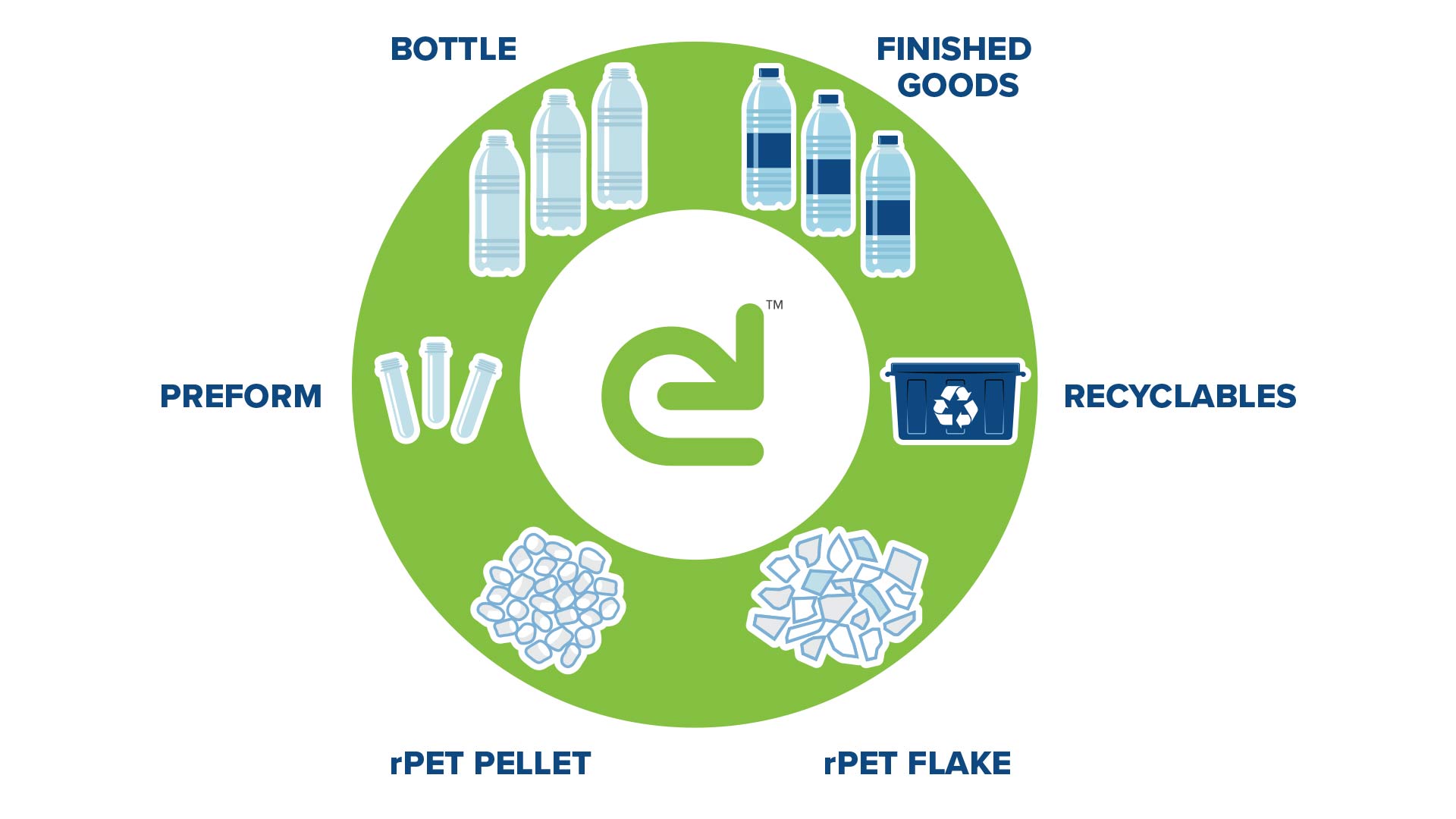
1. rPET (Recycled Polyethylene Terephthalate)
Essentially: Polyester fibers are produced by recycling used plastic bottles (PET), through processes such as cleaning, melting, granulation, and filament extraction.
| Dimension | Conversational Interpretation (Brand/PM View) | Key Indicators (Table Format) |
| Brand Story Potential | Quantifiable, Mass-Market Eco-Narrative! Your brand can instantly communicate to the user: “One backpack = 5 plastic bottles recycled!” This is 100 times more effective than vague environmental philosophy. Consumers grasp it immediately, leading to huge viral potential. Perfect for B2C brands seeking rapid market penetration and mass appeal. | Environmental Impact: Intuitive, Easily QuantifiableApplicable Scenarios: FMCG, Event Merchandise, Mass Market |
| Supply Chain & MOQ | “Make it when you need it, zero supply anxiety!” rPET is the most high-volume and technologically mature recycled material, with global suppliers. This means your custom orders have the lowest MOQ barrier. The supply is extremely stable and abundant, accommodating projects of any size. Say goodbye to supply chain bottlenecks! | Supply Chain: Extremely Stable, Abundant SupplyMOQ (Minimum Order Quantity): Lowest Barrier, Suitable for Any Scale |
| Bulk Cost Advantage | The Best Value “Green Substitute”! The price difference compared to virgin polyester fiber is negligible—in some specifications, it’s even more competitive. This makes it the go-to eco-friendly material for budget-sensitive custom projects. Achieve excellent environmental results without breaking the bank. | Cost: Most Cost-AdvantageousPrice Comparison: Comparable to Virgin Polyester, Potentially Better |
| Performance Profile | The All-Around “Stat-Balanced Warrior”! It offers a great balance of water resistance, abrasion resistance, and lightweight characteristics. It’s the top choice for everyday commuting bags and high-capacity backpacks. If you need extra durability, post-finishing processes (like PU coating) can easily enhance its ruggedness. | Performance: Balanced and Sufficient for Daily UseKey Features: Waterproof, Abrasion-Resistant, LightweightRecommended Uses: Daily Commuting Bags, Large Backpacks |
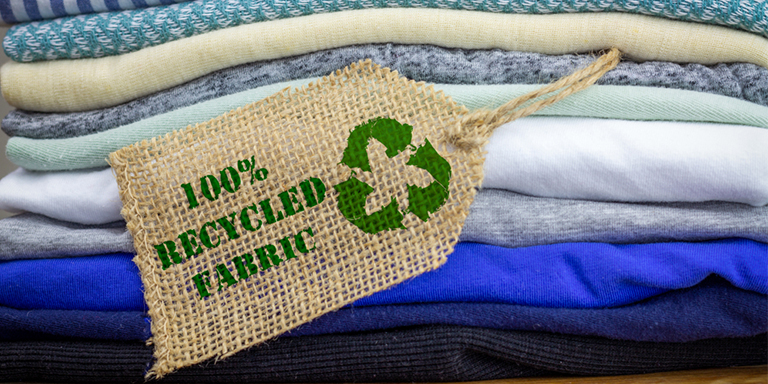
RPEt is suitable for the mass production of backpacks with high cost-effectiveness, and it also has the characteristic of stable delivery time.
2. Recycled Nylon
Essentially: By recycling discarded nylon waste such as fishing nets, carpets, and industrial waste materials, they are decomposed, purified, and re-polymerized to be produced.

| Dimension | Conversational Interpretation (Brand/PM View) | Key Indicators (Table Format) |
| Brand Story Potential | The “Hardcore” Eco-Narrative with a Professional Halo! Your story starts with recovering ocean waste (like fishing nets) or industrial scraps. This environmental impact is far more compelling and “hardcore” than recycling plastic bottles. It suits premium brands focusing on professional, exploration, or high-tech aesthetics, serving as a powerful highlight for collaborations or limited-edition custom runs. | Eco-Story: High-Impact (e.g., Recovering Ocean Nets)Applicable Scenarios: Outdoor, Expedition, High-Tech, Limited Editions |
| Supply Chain & MOQ | High Barrier, Guaranteed Quality! Recycled Nylon has a high technological barrier, so the supply chain is concentrated (mainly a few large manufacturers, like ECONYL®, with strict authorization and partnership systems). This means a higher MOQ (Minimum Order Quantity). It’s best suited for custom projects that are well-funded, quality-driven, and positioned in the mid-to-high-end market. | Technology Barrier: High, Strong Technical Expertise RequiredSupply Chain: Relatively Concentrated, Strict AuthorizationMOQ (Minimum Order Quantity): Higher, Suited for Mid-to-High-End Projects |
| Bulk Cost Advantage | “Expensive, but Worth Every Penny!” Due to the complex recycling and regeneration technology (e.g., depolymerization and repolymerization), the cost of Recycled Nylon is significantly higher than rPET. It is classified as a high-value-added material. If your focus is on ultimate performance and brand premium rather than cost control, this is your primary choice. | Cost: Expensive, High Value-AddedPrice Comparison: Significantly Higher than rPET and Virgin Polyester |
| Performance Profile | The Undisputed “Performance King”! Its abrasion resistance, tear strength, and lightweight properties are top-tier, far exceeding rPET. It is the ultimate material for custom functional products with extreme requirements, such as professional mountaineering packs, tactical bags, and high-end luggage. | Performance: Top-Tier Performance, Far Exceeds rPETKey Features: Extremely High Abrasion Resistance, Tear Strength, LightweightRecommended Uses: Professional Mountaineering, Tactical Bags, High-End Luggage |
If you have a sufficient budget, aim for a high-end brand positioning, and are seeking the ultimate professional performance and a hardcore environmental protection story, then recycled nylon is the best choice.
Part 2: Bio-based Materials
Biobased materials (such as plant-based leather and natural fibers) possess unique textures and the characteristic of biodegradability, making them the preferred choice for customers who pursue brand differentiation and natural concepts.
3.Cactus Leather
Essence: Pure leather made by extracting fibers from the leaves of Mexican cacti and mixing them with a portion of polyurethane (PU).
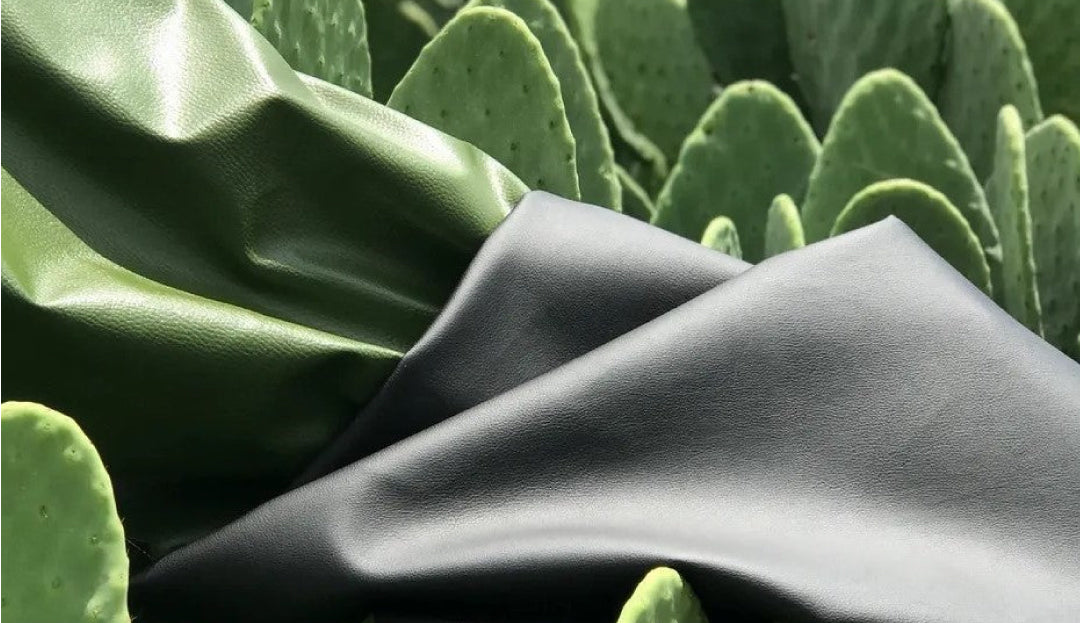
| Dimension | Conversational Interpretation (Brand/PM View) | Key Indicators (Table Format) |
| Brand Story Potential | The “Future-Forward” Narrative of Veganism and Zero Cruelty! Your story goes beyond general sustainability to focus on innovation, animal welfare, and minimal resource use (like no irrigation/low water consumption). It’s perfect for fashion, light-luxury, vegan, and sustainable lifestyle brands. Custom items like clutches or laptop sleeves instantly position your product at the industry’s cutting edge. | Eco-Story: Veganism, Zero Cruelty, Low Water ConsumptionApplicable Scenarios: Fashion, Light Luxury, Vegan/Sustainable Lifestyle, Innovation |
| Supply Chain & MOQ | The “Growing Pains” of a New Material—Plan Ahead! The supply chain is still in its early stages of development, with few core raw material suppliers and domestic processors requiring specialized technology. This results in a higher MOQ and relatively longer lead times. You must plan meticulously in advance; this material is not suited for “rush orders” or large-scale, low-cost projects. | Supply Chain: Early Stage, Few Core SuppliersTechnology Barrier: High, Requires Special Processing TechMOQ/Lead Time: Higher MOQ, Longer Lead Time, Requires Advanced Planning |
| Bulk Cost Advantage | The Innovation Symbol—One of the Most Premium Materials! Due to technological innovation and limited production scale, Plant-Based Leather’s cost is higher than standard PU synthetic leather, and often higher than quality genuine leather. It represents a high-premium custom product, serving as a “value symbol” that demonstrates the brand’s commitment to innovation and sustainability. | Cost: One of the Most Premium MaterialsPrice Comparison: Higher than Standard PU and Genuine LeatherPositioning: Value Symbol for High-Premium Customization |
| Performance Profile | The “Simulated Leather” with a Premium Hand Feel! Its greatest strength is its highly realistic appearance, featuring softness and breathability that closely mimics genuine leather. However, its physical performance in terms of scratch resistance and tear strength is often inferior to top-tier PU or Recycled Nylon. | Performance: Highly Realistic Appearance, Softness, BreathabilityKey Features: Hand Feel Closely Mimics Real LeatherDurability: Moderate Scratch and Tear Resistance |
The suitable target customers are those who are vegan, environmentally conscious, and of the “luxury-lite” category. They can afford high costs and long delivery periods, and the product should be positioned as a “pioneer” that showcases innovation and values.
4.Cork
Essence: The natural material extracted from the bark of cork oak trees without cutting down the trees, is renewable.
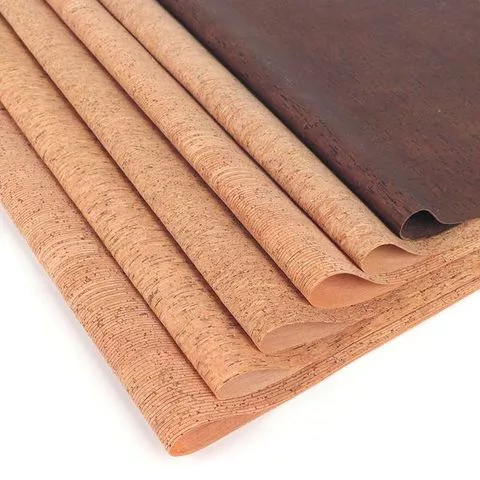
| Dimension | Conversational Interpretation (Brand/PM View) | Key Indicators (Table Format) |
| Brand Story Potential | Natural, Lightweight, and Unique “Zen Aesthetics”! The core narrative is about natural growth, zero harm to the trees, and renewability. Crucially, every cork product has a unique texture, making every custom piece a “limited edition.” Highly suited for brands in cultural, gifting, tea ceremony, or home goods that seek an Eastern or natural Zen aesthetic—it instantly elevates the sense of premium design. | Eco-Story: Natural Growth, No Tree Harm, RenewableUnique Selling Point: Unique Texture (Natural Customization)Applicable Scenarios: Cultural Products, Gifting, Home Goods, Zen Brands |
| Supply Chain & MOQ | Regionally Concentrated, but Mature Processing in China! The primary source of cork is concentrated in the Mediterranean region (like Portugal). The advantage is that there are mature cork bag customization factories in China to handle processing. The MOQ is moderate, but you must factor in the shipping cycle for the raw material; it’s not suitable for highly urgent projects. | Supply Chain: Regionally Concentrated (Mediterranean)Processing: Mature Customization Factories in ChinaMOQ/Timeline: Moderate MOQ, Must Factor in Raw Material Shipping Time |
| Bulk Cost Advantage | The Cost-Effective Natural Material! Cork’s cost sits at a mid-to-high level. It is higher than the mass-market rPET but lower than high-tech or emerging materials like Recycled Nylon and Plant-Based Leather. It offers a cost-effective natural and eco-friendly option. | Cost: Mid-to-High Range, Cost-Effective for Natural MaterialsPrice Comparison: Higher than rPET, Lower than Recycled Nylon/Plant Leather |
| Performance Profile | Natural Waterproof, Insulating, and Ultra-Light “Functional Helper”! Cork is naturally waterproof, insulating, and extremely lightweight, offering a unique texture. However, note that its resistance to sharp object puncture is relatively weak. Therefore, it’s best for custom items that are lightweight and non-heavy-duty, such as light backpacks, linings, or document holders. | Performance: Naturally Waterproof, Insulating, Ultra-LightKey Features: Unique TextureLimitation: Weaker Puncture ResistanceRecommended Uses: Light Bags, Linings, Document Holders |
It is suitable for customers who pursue unique designs and natural textures. Cork is the best choice for the niche and differentiated product line.
5.Organic Cotton
Essential feature: Cotton that has not been treated with chemical pesticides or fertilizers for more than three years during the cultivation process and has obtained certification.

| Dimension | Conversational Interpretation (Brand/PM View) | Key Indicators (Table Format) |
| Brand Story Potential | The “Ethical Narrative” of Health, Non-Toxicity, and Comfort! The core story emphasizes care for the land, the environment, and the workers (non-GMO, pesticide-free). This is the most effective “emotional card” to play with consumers. It is especially suited for maternity, children’s, health, and lifestyle brands. It represents safety and trust, often used for custom shopping totes, drawstring pouches, or as a skin-contact lining material in backpacks. | Eco-Story: Health, Non-Toxic, Skin-Friendly, Worker WelfareApplicable Scenarios: Maternity, Children’s, Health, Home GoodsCustom Use: Totes, Small Bags, Backpack Lining |
| Supply Chain & MOQ | Mature Standards, Comprehensive Certification, Reliable Supply! The Organic Cotton supply chain is highly mature, with certification systems like GOTS (Global Organic Textile Standard) ensuring reliability and traceability. Its MOQ is moderate, making it a common and accessible material within the textile supply chain. | Supply Chain: Mature Standards, Complete Certification (GOTS)MOQ: Moderate, Common in Textile Supply Chain |
| Bulk Cost Advantage | Moderate-to-High Cost, a Controllable “Investment in Health”! The cost of growing Organic Cotton is indeed higher than conventional cotton, resulting in a slightly higher material cost. However, for backpack or accessory materials, the overall cost remains manageable. It represents a justifiable premium, demonstrating the brand’s commitment to raw material quality and sustainability. | Cost: Moderate-to-High, Higher than Conventional CottonPositioning: Justifiable Premium, Reflects Material Commitment |
| Performance Profile | Soft and Breathable, but Needs a “Partner”! The biggest advantages are its skin-friendliness, softness, and breathability, offering an excellent user experience. However, its major drawbacks are obvious: it is not waterproof, stains easily, and its abrasion resistance is far lower than synthetic fibers like rPET or Recycled Nylon. Therefore, when customizing a backpack, it often needs to be combined with other materials (e e.g., wax coatings or used as a lining for synthetic shells) to improve functionality. | Performance: Skin-Friendly, Soft, BreathableLimitations: Not Waterproof, Not Dirt-Resistant, Poor Abrasion ResistanceImprovement Solution: Requires Combining with Other Materials (e.g., Wax)Recommended Use: Lining, Light Non-Functional Bags |
Suitable for mother-and-baby, health and home life brands. They aim for safety and skin-friendly features, and offer customized lightweight and non-functional products, or use them as linings to enhance the comfort of use.
Part 3: Four Key Considerations for Customization Decisions
Four Core Points for Customization Decisions
Before deciding custom backpack material, please make sure you know four key points below, which will help you choose the most suitable material:
- Target Customers and Budget
If budget limited and prefer mainstream style: Choose recycled polyethylene terephthalate (rPET), emphasize number of recycled bottles used.If budget enough and want high-end product: Choose recycled nylon or cactus leather, seek better performance or unique style. - Main Functional Requirements,Must durable and suitable for outdoor use: Choose recycled nylon.Should lightweight and suitable for commuting: You can choose rPET or cork material.Must pure plant-based material and also good looking: You can choose cactus leather or organic cotton.
- Supply Chain and Delivery Time.If you want quickly receive large quantity goods: Choose rPET.If you can accept a little bit longer delivery time and higher Minimum Order Quantity (MOQ): Choose recycled nylon or cactus leather.
- How to Tell the Brand Story.Choose tell specific and quantifiable environmental story: Choose rPET (mention plastic bottle number).Choose tell concept, innovation, and professionalism story: Choose recycled nylon (for ocean waste handling) or cactus leather (zero cruelty innovation).
In summary:When choosing custom backpack material, brand need reach a perfect balance in three aspects: the product itself, supply chain, and promotion marketing.