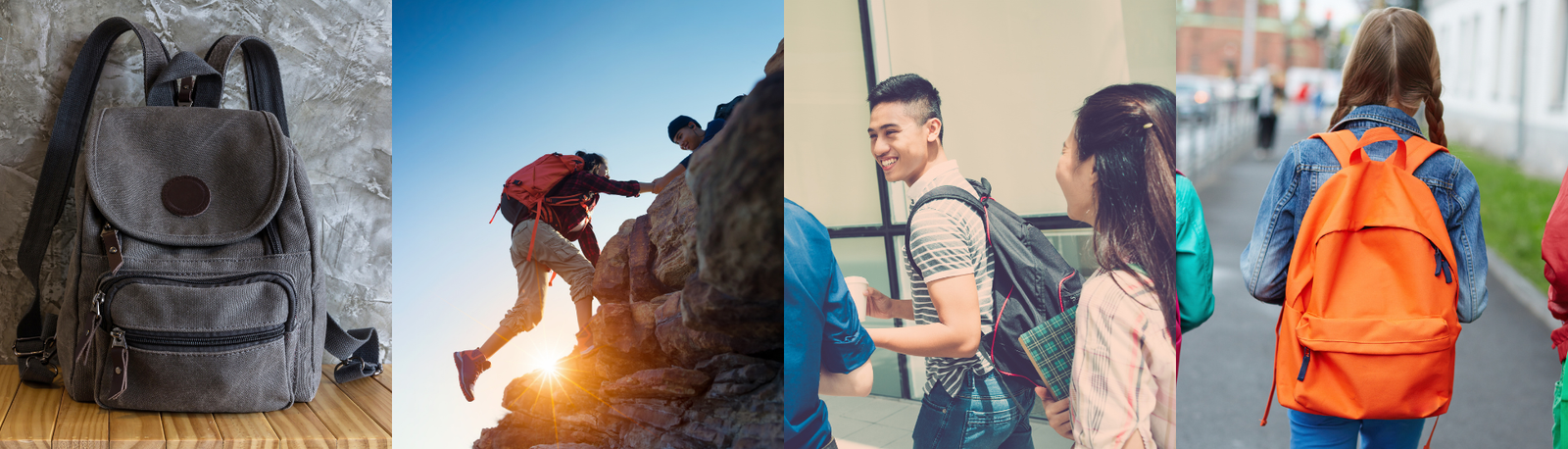
Hello everyone, I’m SENHAN, a 12-year veteran in backpack manufacturing.
During the custom production process, my clients often ask me: “We have the design ready, but what printing techniques can we actually use on our backpacks? What are the pros, cons, and price differences?”
To be honest, backpack printing is much more complex than printing a T-shirt—it’s full of potential pitfalls. Many brands only look at the unit price, and end up with prints that peel off easily, have inconsistent colors, or even damage the fabric’s waterproof properties.
Don’t worry. Today, I’m going to break down all the major backpack printing “black technologies” for you in simple terms. I’ll help you avoid those “mis-printing” traps and find the perfect balance between Aesthetics, Durability, and Cost!
1.What are We Really Printing On?

1.1 The Printing “Love Triangle”: Aesthetics, Durability, and Budget—Can You Have It All?
Customized backpacks are no longer just functional tools; they are the “face” of your brand image. But why is backpack printing so tricky?
Because backpack fabrics are “hardcore”: heavy canvas, waterproof nylon, high-density polyester… They all have special coatings and textures that demand extremely high adhesion from the ink.
Therefore, choosing a process is essentially playing a “Love Triangle” game:
Aesthetics (The Look): Is the color vivid enough? Can it handle complex, photo-grade gradients?
Durability (The Lifespan): Will it peel, crack, or fade when faced with abrasion, washing, or sun exposure?
Cost (The Wallet): What’s the Minimum Order Quantity (MOQ)? Is it cheap to produce at scale?
Focusing on just one element is how the final product fails. This guide will show you how to balance these three factors.
1.2 First, Figure Out Your Needs
You need to categorize your demands to read this guide effectively:
🏆 Big Brands/High Volume: I need the lowest unit cost and the strongest durability. I can accept a high MOQ.
🎨 Designers/Niche Customization: I need design freedom and small batches (multiple SKUs). One piece MOQ is great.
⚙️ Functional Backpacks: I prioritize outdoor-grade abrasion resistance, waterproofing, and UV resistance. Functionality comes first.
Now, let’s deep-dive into the three main printing methods based on Cost, Durability, and Fabric Compatibility.
2.Screen Printing, The “Cost Killer” for Bulk Orders
Screen Printing is the oldest and most widely used technique. Simply put, it uses a “screen mesh” to press ink onto the fabric using a squeegee Screen Printing

2.1 Screen Printing: Why Does it Get Cheaper the More You Order?
Screen Printing has a unique cost model: High upfront investment, near-zero cost later.
High Upfront Cost (Fixed Cost): For every color you print, you pay a “screen setup fee.” Printing a four-color logo requires four separate screens.
Low Subsequent Cost (Variable Cost): Once the screens are made, the printing process itself mainly costs ink and labor, making the unit cost extremely low.
My Expert Takeaway: Due to the high fixed cost, screen printing naturally discourages small orders. If your order volume is over 500 or even 1000 pieces, the cost advantage of screen printing is unbeatable!
2.2 The “God-Tier” Benefit: Extreme Durability
High-quality screen printing, especially when using Plastisol or the more flexible Silicone Ink, forms a thick, solid layer of ink on the fabric surface.
High Color Saturation: The thick ink layer provides strong coverage, allowing bright colors even on dark fabrics.
Unmatched Abrasion Resistance: This physical ink layer is highly resistant to friction and tearing, allowing it to withstand the daily wear and tear that backpacks endure.
2.3 The “Trap”: Multi-Color Designs Cost More!
The Multi-Color Trap: If your design is photo-grade, includes gradients, or has more than 5 colors, the screen setup fees and printing time will skyrocket. The cost advantage will quickly vanish, potentially making it more expensive than digital printing!
Waterproof Fabric Challenge: For smooth, waterproof-coated fabrics like Nylon, standard inks adhere poorly. You must use special silicone inks or adhesion promoters to ensure the print doesn’t peel. If the factory cuts corners on curing, even the most durable process can fail instantly.
3.The “Civil War” Between Sublimation and Heat Transfer
Heat Cured Printing relies on high heat and pressure to apply the design. There are two main techniques here that people often confuse.

3.1 Sublimation: The “Soulmate” of Polyester Fabric
Sublimation is essentially “steaming” the ink into the fiber.
Perfect Feel and Color: The ink turns into a gas under high heat and deeply penetrates the molecular structure of Polyester fibers. The print has zero hand-feel (it feels like the fabric itself). It can achieve photo-grade, full-color gradients.
Excellent Durability: Since the ink is “locked” inside the fiber, it is highly abrasion-resistant and waterproof.
The Fatal Flaw: It strictly requires Polyester fabric (or high poly-blends) and the base color must be light or white! If you have Nylon, Canvas, or a dark fabric, sublimation is completely out of the question!
3.2 Traditional Heat Transfer: Versatile but “Clunky”
Traditional Heat Transfer involves printing the design onto a special “sticker/film” and then using a heat press to bond the entire film onto the fabric.
Pros: Highly compatible with almost all fabrics (Nylon, Canvas, Cotton) and works on dark colors.
Cons: It leaves a plastic/rubbery “film” on the surface, which gives it a stiff, unnatural hand-feel. Most importantly, it has the worst durability. The plastic film tends to crack or peel at the edges after repeated friction, bending, or washing.
3.3 DTF (Direct-to-Film): The “Digital Upgrade” to Heat Transfer
DTF is a recent trend—think of it as “Premium Digital Heat Transfer.”
It keeps the broad compatibility of heat transfer but uses advanced adhesive and ink control to make the layer thinner and softer, significantly improving the hand-feel and durability. It is quickly replacing low-end traditional heat transfer.
4.Digital Direct-to-Film (DTF), The “Game Changer” for Customization
Digital Printing uses an inkjet printhead to spray ink directly onto the fabric or a transfer film. For backpacks, DTF (Direct-to-Film) is the most advantageous.
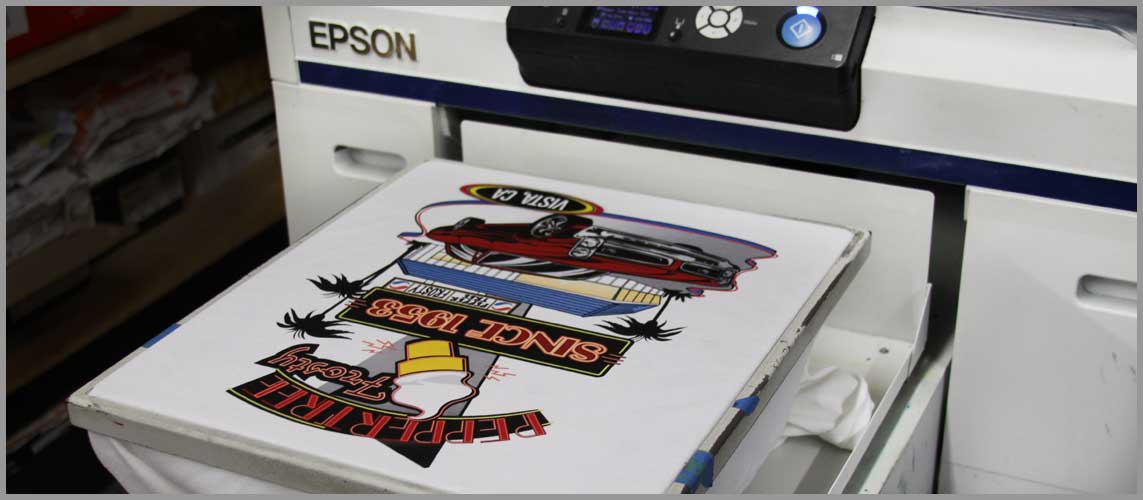
4.1 DTF’s Core Strengths: Zero MOQ and Design Freedom
Digital printing is the savior of the “small order, quick turnover” model.
The End of MOQ: It allows for 1-piece order quantity (Zero MOQ)! This drastically reduces the barrier to entry, inventory pressure, and capital turnover risk for small brands and designers.
Infinite Color: It handles any photo, gradient, or complex detail effortlessly. The number of colors no longer impacts the cost.
4.2 DTF’s “Pain Point”: Expensive at High Volume
High Unit Cost: The ink is a high-cost consumable. Even with bulk production, the unit cost reduction is limited compared to screen printing. If you’re producing hundreds of thousands of pieces, screen printing is still the cost king.
Special Fabric Challenge: Like screen printing, waterproof Nylon and Canvas pose a huge challenge for water-based digital inks. However, DTF technology, with its special adhesive system, is currently the best way to achieve low-volume customization on challenging fabrics like Nylon and Canvas.
5.The Backpack Printing “Final Exam”: Durability Showdown
For a backpack, the durability of the print is the “lifeline” of the product. Here’s the ultimate showdown of the four techniques:
| Performance Metric | Screen Print | Sublimation | Traditional Heat Transfer | Digital/DTF |
| Abrasion Resistance | Excellent (Thick Ink) | Supreme (Deep Penetration) | Poorest (Prone to Peeling) | Good (Depends on Adhesive) |
| Water Resistance (Rain) | Good (Ink Dependent) | Excellent (Dye Locked In) | Moderate | Good (Requires full cure) |
| UV Colorfastness (Sun) | Moderate to Good | Best (Designed for Outdoors) | Moderate (Prone to Yellowing) | Good |
| Hand-Feel | Good (Thin Ink) / Stiff (Thick Ink) | Excellent (No Feel) | Stiff (Plastic Feel) | Good (Relatively Soft) |
SENHAN’s Warning: Customer complaints about “cracked prints” or “peeled edges” almost always point to traditional heat transfer or improperly cured screen/digital prints. When choosing a factory, scrutinize their curing equipment and process!
6.Decision Matrix: Locking Down the Best Process Based on Your Needs
Now for the practical advice. Remember, the decision is a function of Order Volume and Design Complexity.
| Scenario | Order Volume | Design Complexity | Optimal Process | My Rationale |
| Simple Logo / School Bags | Extremely High (1000+) | 1-2 Colors | Screen Printing | Lowest unit cost, high durability. |
| Artistic / Limited Edition | Extremely Low (1-50) | Full-Color Photo Grade | Digital/DTF | Zero MOQ, maximum design freedom, fast turnaround. |
| Outdoor / All-Over Print | Medium-High (200+) | All-Over Gradient | Sublimation | Vivid colors, best hand-feel, high abrasion. (Must be Polyester). |
| Dark Nylon / Complex Logo | Medium (50-200) | 5-8 Colors | Digital/DTF or High-Quality Heat Transfer | Screen setup cost is too high; DTF is more flexible and compatible. |
Conclusion: What’s the Future of Backpack Printing?
Here are three key trends in backpack printing:
DTF Dominance: DTF is rapidly becoming the mainstream choice for medium-to-low volume customization due to its flexibility and balance of cost/quality.
Functional Ink Breakthroughs: Future R&D will focus on inks and pre-treatments that better adhere to waterproof fabrics without compromising their original functionality.
Eco-Friendliness: The use of water-based eco-friendly inks and lower-energy digital printing will become an increasingly important factor for brands focused on sustainability.
I hope this deep analysis helps you avoid costly mistakes and choose the perfect printing process for your custom backpacks!